Christmas light can damage your roof when nails and staples puncture shingles, improper clips break shingle seals, or decorations strain gutters. Walking on the roof and pulling Christmas lights down during removal can also damage roofing materials, leaving potential entry points for rain and snowmelt.
We recommend planning holiday lighting around your roof’s condition, compatible attachment methods, and safe removal. For homeowners in Centennial, CO, protecting shingles and maintaining drainage are essential considerations before installing Christmas lights for the winter season.
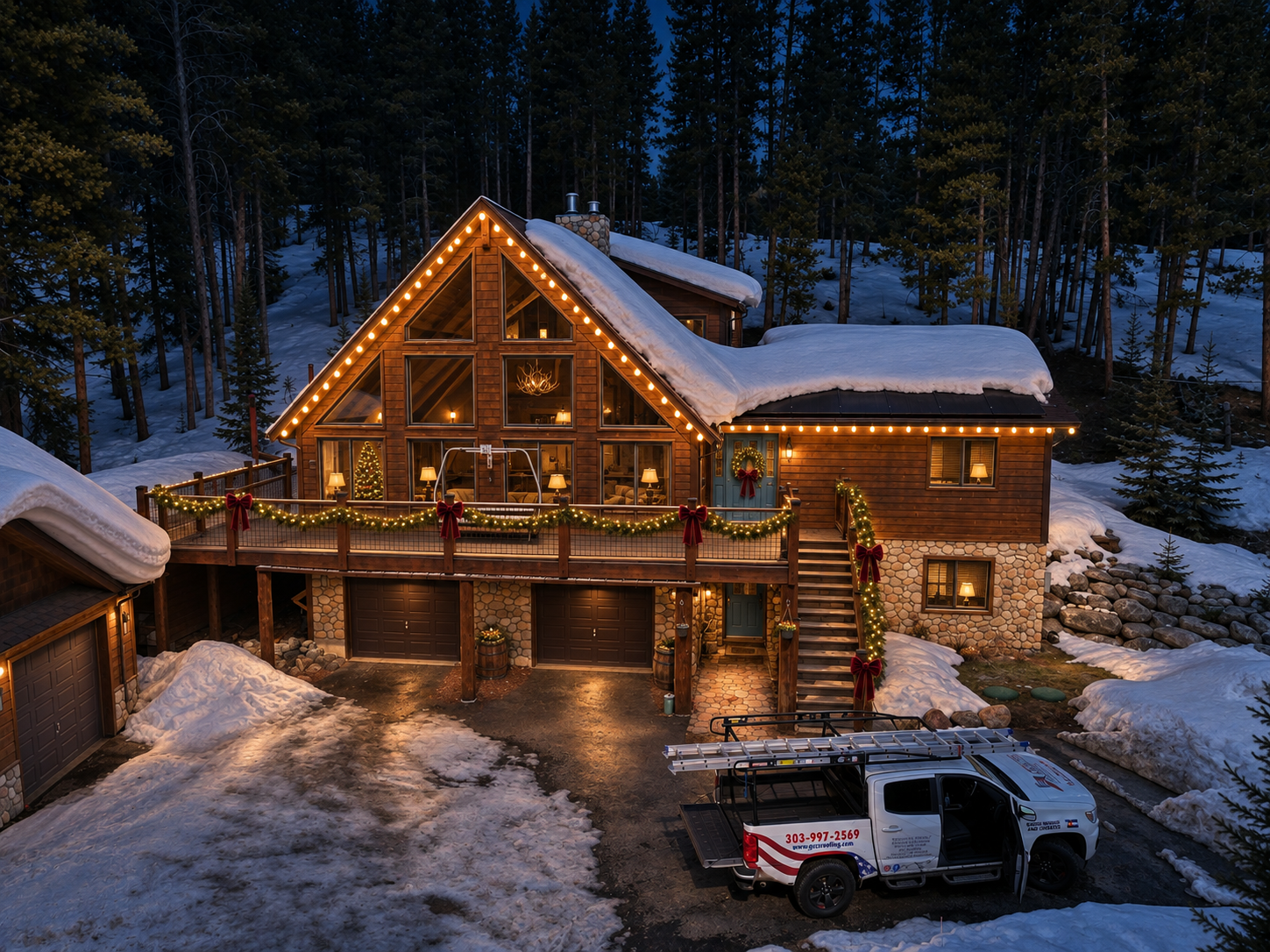
From the driveway, your Christmas lights can look perfect even while a clip is lifting the edge of a shingle. That kind of roof damage can be easy to miss during the holidays, especially if snow covers the roofline. You might only notice something is wrong when the snow melts and a water stain appears on the ceiling.
If you’re planning to hang Christmas lights on your Centennial home, start by looking at the roofline from the ground. A gutter that’s already sagging or a shingle that looks loose is worth checking before you decorate. Below, we’ll cover the installation and removal mistakes that can damage your roof and what to consider when choosing how to hang your lights.
How Christmas Light Installation Creates Roof Leaks
Nails and Staples Leave Openings in Roofing Materials
Driving nails, screws, or staples through shingles introduces penetrations that were never part of the roof’s installation design. Even small openings can create opportunities for moisture intrusion. Roofing manufacturers specifically advise against penetrating roofing materials to secure holiday decorations.
The concern extends beyond the weeks when the lights are on display. Removing a fastener does not restore the material it pierced. A roof can appear unchanged from the driveway while still needing attention at the attachment point.
We recommend treating every decorative fastener driven through roofing as a reason for evaluation. Leaving the fastener in place, removing it, and covering it with an arbitrary sealant are different actions with different consequences. The correct repair depends on the affected material and surrounding condition.
Improper Clips Can Lift Shingles and Disturb Their Seals
Avoiding nails is only part of protecting a shingle roof. A clip that must be forced beneath a sealed shingle can disturb its bond to the course below. IKO advises against clips that tuck underneath shingles because of the risk of lifting them.
We select attachment methods around the roof’s existing details. A clip should fit its intended mounting surface without prying, bending, or forcing roofing components apart. If a section of the roof cannot accommodate an appropriate attachment, we recommend changing the display layout.
Walking on the Roof to Hang Lights Can Damage Shingles
Roof access often becomes the most consequential part of holiday decorating. Reaching a peak or crossing a slope to straighten a light string can expose roofing materials to avoidable wear.
GAF identifies foot traffic as a potential cause of granule loss and shingle damage. CertainTeed also warns that cold shingles are more susceptible to cracking. These concerns make winter rooftop decorating particularly unsuitable as a casual household task.
We recommend planning the display from the ground before installation begins. Identify which rooflines are accessible, which sections require professional access, and which would be better left undecorated. A deliberate layout reduces repeated trips and last-minute adjustments.
Existing damage also matters. If shingles already appear cracked, displaced, or uneven, decorating should wait until their condition is assessed. Holiday lighting should never make an unresolved roofing problem harder to inspect or repair.
Christmas Decorations Can Strain Gutters and Roof Edges
Gutters are a common mounting location for holiday lights, but the condition of the gutter system still determines whether that location is suitable. GAF recommends lightweight decorations and cautions that excessive decorative weight can cause gutters to sag.
We distinguish between supporting an appropriate light string and using a gutter as an anchor for a larger display. Oversized ornaments, suspended decorations, and tightly stretched strings require closer consideration than a simple roofline outline.
Before installation, look from the ground for sections that appear uneven, separated, or pulled away from the fascia. Existing defects should be evaluated before decorations are attached. Adding lights should follow maintenance, rather than become a reason to postpone it.
A lighting installer should also account for removal. An attachment that can be installed quickly but cannot be released without pulling against the gutter is a poor choice for a temporary display.
Why Colorado Winter Conditions Matter
Snowmelt Can Reveal Existing Roof Openings
A roof defect does not have to produce an immediate ceiling stain to deserve attention. Snowmelt can expose vulnerabilities that remained unnoticed during dry weather.
Ice dams create an additional concern. When snow melts over a warmer roof area and refreezes at a colder eave, accumulated ice can cause water to back up beneath shingles. The U.S. Department of Energy identifies air sealing, insulation, and appropriate ventilation as measures that help address the heat transfer behind this process. Building Science Education
We evaluate holiday-related damage alongside the roof’s broader winter performance. A leak discovered after decorating may involve a new penetration, an older flashing problem, ice-related water backup, or several conditions together. Timing helps guide an investigation, but it does not establish the cause by itself.
Our guide to preparing your roof for the first snow explains additional areas to assess before winter precipitation arrives.
Installation and Removal Depend on Safe Weather
The date on the calendar should not determine whether roof work proceeds. IKO advises against hanging lights when snow or ice is present on the roof or ground, or during wet weather.
We recommend allowing flexibility in both installation and removal dates. A display should not require someone to climb onto an unsuitable surface simply because the holidays are approaching or have ended.
If conditions prevent safe access, the next step is to arrange an appropriate professional assessment and schedule the work when it can be completed safely.
How to Hang Christmas Lights Without Damaging Your Roof
Match the Attachment to the Mounting Surface
Plastic light clips can provide an alternative to penetrating fasteners, but their suitability depends on the surface and product design. A gutter clip, a bulb holder, and an attachment intended for another exterior component are not automatically interchangeable.
We recommend checking compatibility before purchasing an entire installation system. The chosen attachment should support the intended lights, fit the mounting location, and release without damaging the underlying material.
The display design should follow those constraints. When an attachment requires force or modification to fit, reconsider the location rather than improvising a connection.
Plan the Layout Before Working at Height
Test the lights, measure the intended display, and decide where each run will begin and end before installation. GAF recommends untangling and testing light strings before climbing to work.
We also recommend planning the route for cords and connections at this stage. A complete layout makes it easier to identify locations that would otherwise require awkward reaching, repeated repositioning, or unnecessary roof access.
The most practical design is one that can be installed, maintained, and removed using an appropriate access method throughout the season.
Inspect Lights and Use Suitable Outdoor Electrical Equipment
Roof protection and electrical safety belong in the same installation plan. The Consumer Product Safety Commission recommends checking for cracked sockets, damaged wiring, and loose connections, using equipment rated for its intended location, and providing GFCI protection for outdoor lights.
We recommend following the specific product instructions for connections, electrical limits, and outdoor exposure. A lighting problem should be resolved before installation instead of becoming something that requires troubleshooting at roof height.
Removing Christmas Lights Without Tearing Shingles or Gutters
Removal deserves the same planning as installation. Pulling a light string from below can transfer force to multiple attachment points at once. GAF warns that yanking lights down can tear shingles and pull gutters loose. gaf.com
We recommend releasing attachments individually using the intended removal method. If a clip resists, the response should be to inspect the connection rather than apply more force through the cord.
Frozen or inaccessible attachments require additional patience. Do not turn a routine takedown into a roof repair by forcing decorations free under unsuitable conditions.
After removal, compare the roofline with photographs taken before installation, if available. Look for visible changes around attachment locations and arrange an inspection when something appears displaced or damaged.
Signs Your Roof Needs Attention After Holiday Decorating
Warning signs include newly lifted shingle edges, visible punctures, displaced roofing pieces, or gutter sections that no longer sit as they did before installation. These observations warrant further assessment, although they do not establish the full extent or cause of damage.
Inside the home, new water staining or active dripping should prompt an investigation. IKO identifies improperly installed rooftop objects, including Christmas decorations, among the possible sources of roof leaks.
We recommend documenting when the change appeared, where decorations were attached, and whether the problem followed installation, a storm, or removal. That information helps a roofing professional evaluate the affected area.
A professional roof inspection can establish whether the problem involves the holiday attachment points or another component of the roofing system.
What to Do if Christmas Lights Have Damaged Your Roof
Arrange Repairs Based on the Actual Damage
A visible hole or lifted shingle deserves a repair decision based on the material and surrounding assembly. We recommend having the affected area inspected before choosing a patching method.
Roof repair services may address a localized problem when the surrounding roof remains serviceable. The inspection should establish what needs repair and whether moisture has affected adjacent components.
Holiday installation damage alone does not establish a need for roof replacement. That decision should follow an assessment of the roof’s overall condition, the extent of damage, and the practicality of a lasting repair.
Respond Promptly to Active Water Intrusion
If water is entering the home, protect belongings where it is safe to do so and arrange emergency roof repair. Avoid touching wet electrical fixtures or entering an unsafe area beneath damaged ceiling materials.
We recommend providing photographs and a clear description of what changed after decorating. Do not climb onto the roof to recreate the installation or search for a suspected opening.
Choosing Professional Help for Holiday Roof Protection
A useful discussion with a lighting installer should cover attachment methods, access, existing roof defects, and removal. Ask how the proposed system fits your roof and gutters, and how the installation will be taken down without pulling against roofing materials.
We recommend resolving these details before work begins. A clear plan gives the homeowner and installer a shared understanding of where decorations will go and how the property will be protected.
At GCCS Roofing, LLC in Centennial, CO, we provide roofing services that help homeowners assess damage and determine appropriate repairs. When holiday decorating raises concerns about shingles, roof edges, or leaks, contact our roofing team to discuss the property.
Frequently Asked Questions About Christmas Light Roof Damage
Can Christmas Lights Damage a Roof Without Leaving Visible Holes?
Yes. Damage may involve lifted shingles, disturbed seals, foot traffic, or force applied during removal. An absence of visible punctures does not confirm that the installation left the roof unaffected.
Are All Christmas Light Clips Suitable for Shingles?
No. Clip compatibility depends on its design and the mounting surface. We recommend avoiding any attachment that requires forcing apart roofing materials or disturbing a sealed shingle.
Should We Inspect the Roof Before or After Installing Holiday Lights?
An inspection is appropriate before installation when existing defects are suspected, and after removal when damage or changes become apparent. Photographs taken before decorating can also provide a useful reference.
Do Christmas Lights Cause Ice Dams?
Ice dams develop from roof temperature differences that allow snow to melt and refreeze near colder roof edges. We assess lighting attachments separately from the insulation, air sealing, ventilation, and roof details relevant to ice-related leakage.
CONCLUSION
Protecting your roof during the holidays begins with suitable attachments, a practical display layout, and careful removal. We recommend addressing existing defects before decorating and investigating new damage promptly. Christmas lights should leave a finished roofline when the season ends, with shingles, gutters, and drainage ready for the weather ahead.