
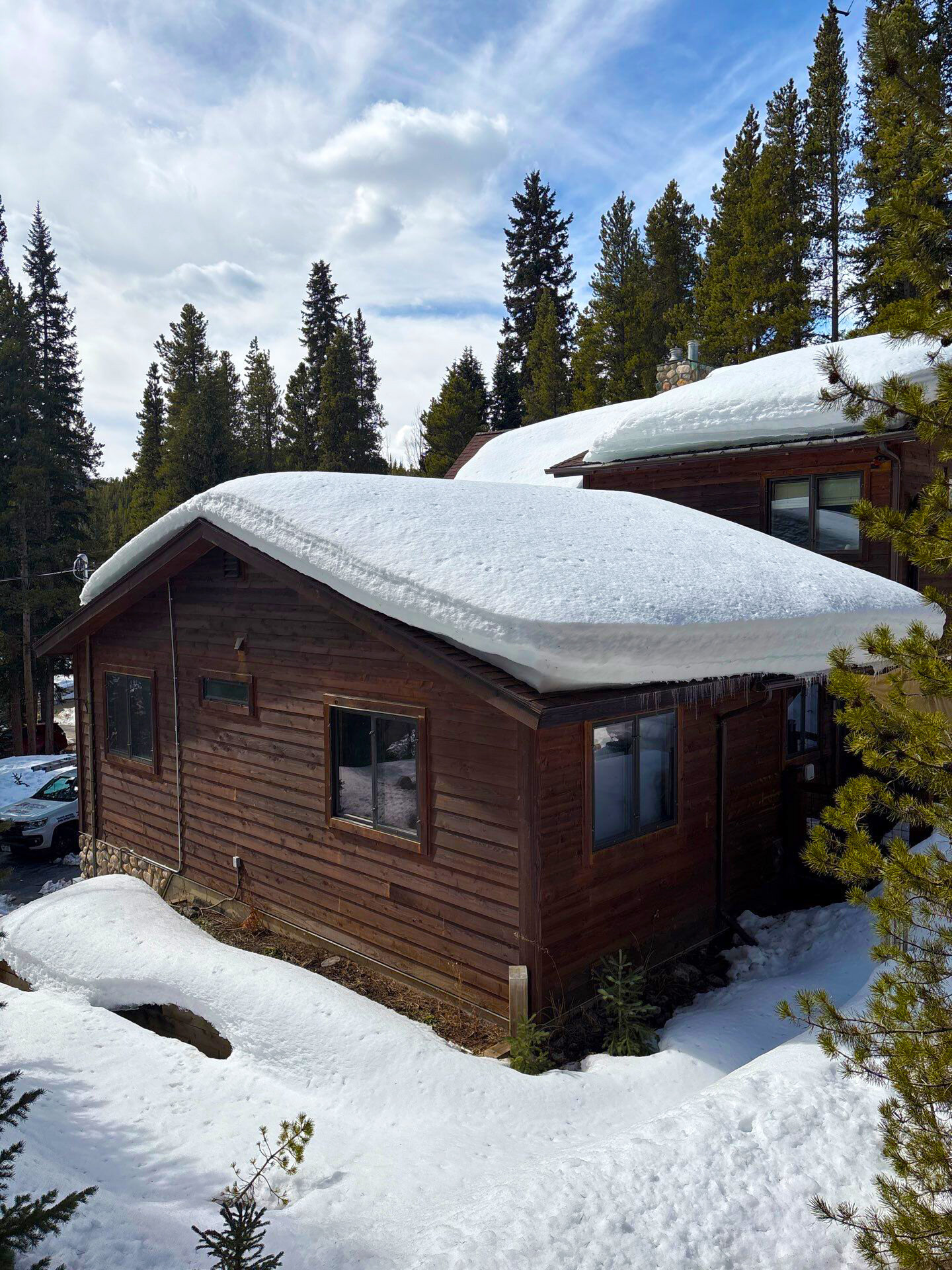
Ice dams are a common cause of winter roof damage in Colorado, allowing melting snow to enter a home instead of draining safely off the roof. They form when snowmelt flows toward a colder section of the roof and refreezes, creating a barrier along the eaves. As more snow melts, water collects behind the ice and can back up beneath shingles, reaching the roof deck, attic insulation, and interior finishes.
The resulting roof damage may develop before a homeowner notices a leak. A ceiling stain or damp wall can be the first visible sign that water has already traveled through the roofing system. Addressing ice dams early helps reduce prolonged moisture exposure and gives homeowners an opportunity to investigate the problem before repairs become more extensive.
Preventing ice dams requires more than removing visible ice. We evaluate how heat escapes into the attic, where snow melts unevenly, and how water moves across vulnerable roof details. Air sealing, consistent insulation, appropriate ventilation, and properly installed water barriers each play a role in reducing the conditions that lead to ice dams and protecting against roof damage.
For homeowners in High Country communities, understanding these connections supports better decisions about winter maintenance and roof repairs. In this guide, we explain how ice dams form, which warning signs deserve attention, and how we approach prevention to help protect Colorado homes through repeated freezing and thawing.
What Are Ice Dams?
An ice dam is a buildup of ice that obstructs the flow of melting snow from a roof. It commonly develops near the eaves, where the roof extends beyond the heated exterior walls.
The process begins when part of the roof becomes warm enough to melt the snow above it. Water travels downhill until it reaches a colder surface and freezes. As that cycle repeats, the ice ridge grows and can prevent additional meltwater from leaving the roof.
The concern is the water trapped behind the ice. A sloped roof is designed to shed water downward. When water remains against the roof covering or backs up beneath shingles, it can reach openings that would not normally be exposed to prolonged water contact.
We treat ice dams as a roof performance issue involving temperature, drainage, and water protection together.
What Causes Ice Dams on Colorado Roofs?
Warm Air Escaping Into the Attic
Heat escaping from the living space is a common contributor to ice dam formation. Openings around attic access panels, wiring, plumbing penetrations, and ceiling fixtures can allow warm indoor air to reach an unconditioned attic.
That air can warm the underside of the roof deck. Snow above the warmer area begins melting, even when outdoor temperatures remain below freezing.
Insulation and air sealing perform different jobs. Insulation slows heat transfer through an assembly, while air sealing limits air movement through gaps. Adding insulation without addressing significant air leaks can leave an important source of roof warming unresolved.
We therefore consider the continuity of the ceiling air barrier when evaluating recurring ice problems.
Missing or Uneven Insulation
Inconsistent insulation can create areas where heat escapes more readily. Compressed material, gaps near exterior walls, and poorly insulated attic transitions can contribute to uneven roof temperatures.
Restricted spaces require particular attention. The edges of an attic may have limited room for insulation, while cathedral ceilings and finished attic rooms can conceal conditions that are difficult to assess from inside the home.
The appropriate correction depends on the construction. We recommend evaluating the existing assembly before adding insulation or changing how the roof cavity is ventilated.
Roof Geometry and Uneven Snowmelt
Valleys, dormers, skylights, and intersecting roof slopes influence where snow accumulates and how meltwater drains. Shaded eaves may remain frozen while nearby roof surfaces begin to thaw.
Solar exposure can also contribute to uneven melting. A roof may experience different conditions across separate slopes during the same afternoon.
These differences help explain why ice sometimes returns to one location repeatedly. We use that pattern to guide an assessment rather than assuming every ice dam has the same cause.
Signs of Ice Dams and Winter Roof Damage
A thick ridge of ice along the eaves is a reason to investigate. Large, persistent icicles can also indicate active melting and refreezing, although icicles alone do not establish that water is entering the home.
Other exterior clues include unusual bare patches on a snow-covered roof, ice extending over gutters, and drainage components that appear distorted or are pulling away from the fascia.
Inside, warning signs may include ceiling discoloration, bubbling paint, damp wall finishes, or water appearing near an upper-floor exterior wall. These symptoms can have several causes, so we recommend confirming the source before choosing a repair.
Our guide to signs of winter roof damage explains additional conditions worth watching after snow, ice, and repeated thawing.
How Ice Dams Cause Roof Leaks
Water trapped behind an ice dam can move beneath the roof covering and reach the materials below. Depending on the location and construction, it may enter around fasteners, roof penetrations, flashing transitions, or inadequately protected deck areas.
The visible stain does not always identify the entry point. Water can travel along framing or other surfaces before appearing indoors.
We assess the roof covering, flashing, and underlying protection together. A damaged shingle may need attention, but replacing it will not necessarily resolve the temperature imbalance that produced the ice dam.
The same distinction applies indoors. Repairing a stained ceiling restores its appearance, but the water source and any remaining moisture must be addressed first.
How to Prevent Ice Dams Before Winter
Address Air Leakage Between the Home and Attic
Long-term prevention often begins with reducing unintended heat movement into the attic.
A qualified professional can assess leakage around ceiling penetrations, attic hatches, dropped ceilings, and other transitions. Diagnostic testing may help locate concealed pathways when visual inspection does not explain the problem.
Work near chimneys, flues, and heat-producing fixtures must use appropriate materials and preserve required clearances. Sealing these locations requires attention to the safety and operation of the surrounding building systems.
We recommend treating air leakage as a specific condition to investigate rather than assuming that more insulation alone will solve recurring ice dams.
Restore Consistent Insulation Coverage
Once significant air leakage has been addressed, insulation can help limit the heat reaching the roof deck.
Consistent coverage matters as much as the presence of insulation. Areas near exterior walls, attic access openings, and changes in ceiling height deserve attention because gaps can interrupt the thermal boundary.
The correct insulation approach depends on the roof assembly and applicable requirements. A vented attic and an enclosed roof cavity should not automatically receive the same treatment.
Maintain the Intended Ventilation Path
In a vented roof assembly, intake and exhaust openings work together to move outdoor air beneath the roof deck. Blocked intake areas or interrupted channels can reduce that airflow.
We evaluate ventilation alongside insulation. Material added at the eaves should not obstruct an airflow path the assembly relies on.
Ventilation also has limits. Adding vents does not eliminate warm air leaking through the ceiling. Effective prevention coordinates air sealing, insulation, and ventilation instead of expecting one component to compensate for every other problem.
A roof inspection and maintenance assessment provides a starting point for evaluating roof conditions and identifying areas that need further investigation.
Can Clean Gutters Prevent Ice Dams?
Clear gutters and downspouts support drainage when meltwater can flow through them. Removing leaves and debris before winter helps reduce avoidable obstructions.
However, gutter cleaning does not correct heat loss through the roof. Ice dams can develop even on homes without gutters because the underlying process occurs where snowmelt reaches a freezing roof surface.
We consider gutter maintenance part of winter preparation, along with roof evaluation and attention to recurring melt patterns.
For homes with a history of icing, the more useful question is where water is becoming trapped and why that location remains vulnerable.
The Role of Ice and Water Shield
Ice and water shield is a protective membrane installed beneath the roof covering in designated areas. It helps resist water intrusion when snowmelt backs up beneath shingles.
Its purpose is protection against leakage. It does not stop heat from escaping through the attic or prevent the roof surface from warming unevenly.
Coverage must account for the roof’s configuration, applicable local requirements, and manufacturer instructions. Overhang depth, slope, and vulnerable transitions can influence the protection needed.
During roof replacement planning, we consider these details alongside the visible roofing material. A new roof covering should be supported by properly designed and installed water protection beneath it.
Do Heat Cables and Heated Roof Edges Help?
Roof deicing systems can help maintain drainage paths in selected locations. They may be considered where roof architecture or exposure creates recurring icing concerns.
Their effectiveness depends on system selection, placement, and operation. Heating one area does not automatically address every location where water may refreeze.
We also distinguish active ice management from improvements to the building enclosure. A heated system does not correct air leakage or incomplete insulation.
Before selecting a system, we recommend evaluating the recurring ice pattern and the roof conditions that contribute to it. The objective is a coordinated solution suited to the property.
What to Do if an Ice Dam Is Causing an Active Leak
An active leak requires prompt attention. Move belongings away from the affected area when it is safe to do so, contain dripping water where practical, and document visible damage.
Stay off the roof and keep clear of areas where ice or snow could fall. Chipping, prying, or using an open flame can damage roofing components and create additional hazards.
If water is near electrical fixtures or outlets, avoid contact with the affected equipment. Seek appropriate professional assistance.
Our emergency roof repair services address urgent roofing concerns and help establish the next steps for temporary protection and permanent repairs.
After immediate mitigation, we recommend investigating why the ice formed. Restoring drainage can relieve the current backup while leaving the conditions for another ice dam in place.
Does Snow Removal Solve Ice Dam Problems?
Reducing roof snow can reduce the amount of meltwater feeding an ice dam. However, removal must account for roof material, access, slope, and the risk of falling snow.
Aggressive scraping can damage roofing surfaces. Removing only a narrow strip near the eaves may also leave conditions for freezing farther uphill.
We recommend evaluating snow management as part of the property’s winter maintenance needs. For recurring problems, it should accompany an investigation of heat movement and drainage rather than become the only response after each snowfall.
Does Ice Dam Damage Require a New Roof?
Ice dam formation does not automatically mean a roof needs replacement.
A localized problem may be addressed through repairs to affected roofing materials or flashing, combined with work to reduce the conditions causing the ice. More extensive deterioration may require a larger scope.
We distinguish between the source of the leak, the extent of material damage, and the remaining condition of the roofing system. These findings provide a stronger basis for choosing roof repair or considering replacement.
A clear explanation should connect the recommended work to documented conditions. Homeowners should understand which part of the project repairs damage and which part helps reduce recurrence.
Roof Inspections for Ice Dam Concerns High Country Area
At GCCS Roofing, LLC, located in Centennial, CO, we provide roofing services to help homeowners evaluate winter roof concerns and determine appropriate repair or maintenance steps.
Before an inspection, note where ice accumulates, when leaks appear, and whether the same area has caused problems in previous winters. Photographs taken from a safe location can help show conditions that may have changed by the appointment.
Recurring ice deserves attention even when no interior leak is visible. An assessment can help clarify whether roofing details, drainage conditions, or further evaluation of the attic should be prioritized.
Schedule your inspection by contacting our team. For High Country properties, call 970-578-7663. For Metro properties, call 720-551-7663.
CONCLUSION
Ice dam prevention requires attention to how the home retains heat, how the roof manages snowmelt, and how vulnerable areas resist water backup. Removing ice may address an immediate obstruction, while lasting improvements depend on understanding the conditions behind it.
We recommend evaluating recurring ice, roof damage, and attic performance together. A coordinated plan helps homeowners choose the repairs and preventive measures their property needs before another winter leak develops.