
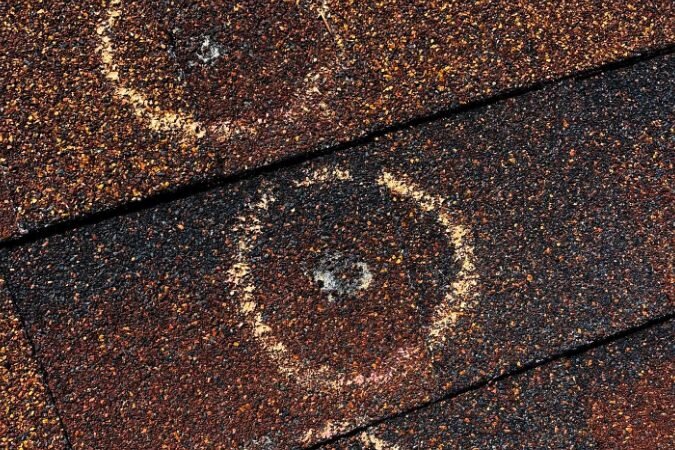
How to tell if your roof has hail damage? The clearest signs of hail damage on a roof are small, dark, circular spots where granules have been knocked loose, soft or bruised patches that give slightly when pressed, and cracked or dented shingles, especially around vents, flashing, and other roof penetrations. If you spot any of these after a storm, the roof needs a professional inspection before the damage turns into a leak.
Avon and the rest of the Vail Valley get hit with hail more than most people realize. At 7,400 feet with fast-moving mountain storms, hail damage here is common, and it’s rarely obvious from the ground. That’s the tricky part. A roof can take a real hit and still look fine from your driveway.
Signs of Hail Damage to Look For
- Granule loss. Asphalt shingles are coated in a layer of granules that protect against UV rays and impact. Hail knocks these loose, leaving dark, bald-looking spots. A few scattered spots can be normal wear. Granule loss concentrated in one area, especially after a storm, points to hail.
- Circular dents or bruising. Press gently on a suspected spot. If it feels soft or gives way, the shingle mat underneath has likely been damaged, even if the surface looks intact.
- Cracked or split shingles. Circular cracks are a hail signature. Straight, linear cracks are usually just age and wear.
- Damage around roof penetrations. Vents, pipe boots, chimneys, and flashing take the brunt of a hailstorm because they sit slightly higher than the roof plane. This is one of the first places we check on every inspection.
- Damage to other exterior surfaces. Dented gutters, dinged AC units, or pitted deck rails and window screens are a good indicator the roof took a hit too, even before you climb up for a closer look.
Why You Can’t Always See It From the Ground
Hail damage doesn’t always mean a hole punched through the roof. More often it’s a compromised layer you can’t see unless you’re standing on it. That’s exactly why a walk-through inspection matters more than a drive-by look or a photo from a drone. On a roof we recently inspected in Avon, we found impact marks, granule loss, and general wear across the shingle field, along with spots around the penetrations, flashing, and drainage areas that needed a closer look. None of that would have shown up from the street.
What a Real Inspection Looks Like
A proper inspection isn’t a five-minute walk around the yard. It means getting on the roof and checking:
- The shingle field for impact marks, granule loss, and wear
- Flashing and roof penetrations, where leaks most often start
- Drainage areas and gutters for signs of granule buildup or damage
- The overall condition of the roofing system, not just the parts that are easy to see
Once that’s documented, you have an honest answer to the question that actually matters: does this roof need a repair, or is it time for a full replacement.
What Happens If Replacement Is the Right Call
A professional roof replacement isn’t just stripping off old shingles and nailing down new ones. It starts with understanding what caused the damage in the first place. On a recent Avon replacement, our crew:
- Removed the existing roofing materials down to the deck
- Inspected and prepared the exposed roof deck
- Installed proper underlayment before any new material went down
- Installed the new roofing system with attention to every layer, not just the top one
Skipping any of those steps is how a roof looks fine for a year or two and then fails early. Getting them right is what protects the home for decades, not just seasons.
Frequently Asked Questions
Can I check for hail damage myself?
You can look for obvious signs like dented gutters or damaged AC units from the ground, but shingle-level damage is hard to spot safely and accurately without training. If you suspect hail damage, a professional inspection is the safer and more reliable next step.
How soon after a storm should I get my roof inspected?
As soon as it’s safe to do so. Hail damage that goes unaddressed can let moisture into the roofing system over time, turning a manageable repair into a full replacement.
Does hail damage always mean I need a full roof replacement?
No. Some hail damage can be repaired. The extent and location of the damage, along with the age and condition of the existing roof, determine whether repair or replacement makes more sense. That’s exactly what a thorough inspection is for.
What should I do if I think my roof has hail damage?
Schedule an inspection with a local roofing contractor who knows what mountain hail damage actually looks like. GCCS Roofing has been inspecting and repairing roofs across Avon and the surrounding Vail Valley communities for over 36 years, and every inspection includes a full walk-through of the shingle field, flashing, penetrations, and drainage areas, not just a look from the ground.